Pelvic Mobility for Birth: Preparing the 3 Levels of the Pelvis for an Empowering Delivery

Share this blog post!
Many pregnant people are told to "trust their bodies" for birth. At the Prenatal Massage & Movement Center,we celebrate that wisdom and take it a step further: You can trust your body and prepare for birth by opening the pelvis. Birth is a physiologically demanding journey that requires strength, balance, and, most importantly, space. Your pelvis isn't just one fixed shape; it is a dynamic, multi-dimensional gateway designed to move. By understanding the three levels of the pelvis and utilizing the Body Ready Method® or Labor Enhancement Massage & Movement approach, you can stack the cards in your favor for an efficient, empowering birth and a smoother recovery.
The Dynamic Pelvis: Creating Space for an Easier Birth
The wisdom of the body for birth is a powerful tool, but in our modern world, that wisdom can be supported by intentional, functional movement. Tight hips or a "stuck" sacrum can make it more challenging for your baby to find the optimal path.
Mobility isn't just about flexibility; it's about creating space. To move through the pelvis, your baby must navigate through 3 different levels of the pelvis. We focus on creating intrinsic change—using movements that create enough tension on the tissues to actually expand the available space within the pelvic bones, making the "maze" easier for your baby to navigate.
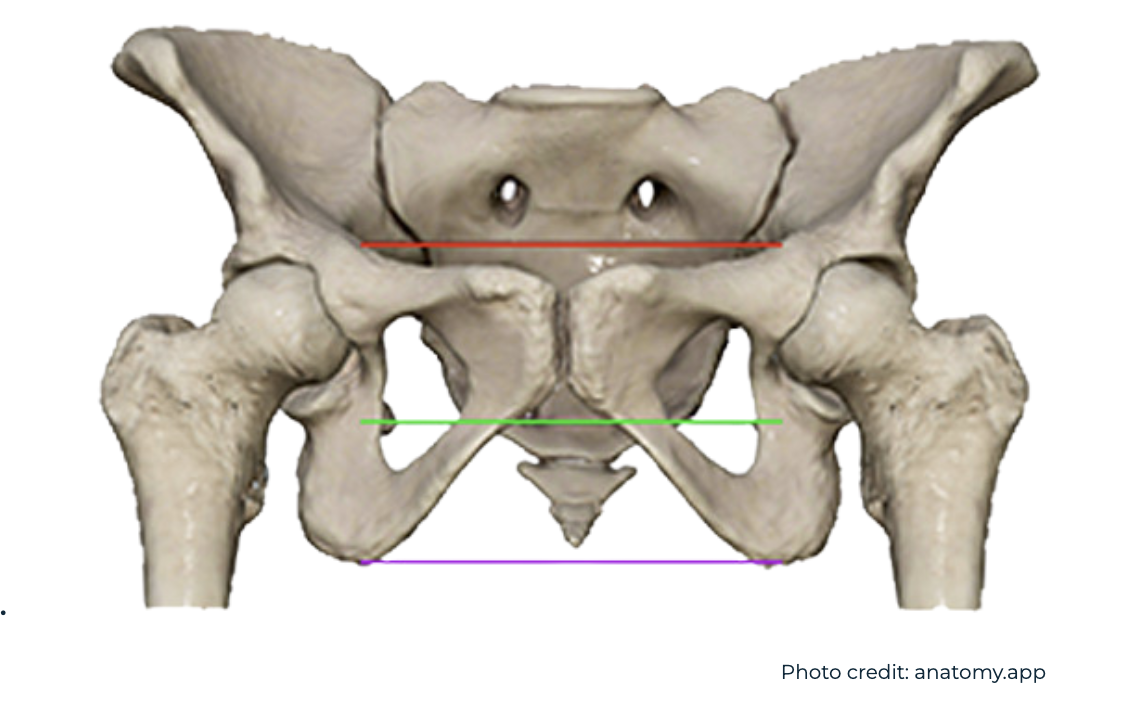
The 3 Levels of the Pelvis
Starting from the top, it is the Pelvic Inlet, the Midpelvis and the Pelvic Outlet.
Level 1: Opening the Pelvic Inlet (The Entrance)
In early labor, you will likely feel contractions high up, often on top of the pubic bone, on the sides of the hips, or higher up on the lower back. This corresponds to the baby being at the -4 to -2 station. You might find yourself intuitively wanting to move front-to-back or rocking your pelvis.
The goal is to widen the top opening of the pelvis from front-to-back, allowing the baby to "engage" and descend into the pelvic cavity.
If the inlet is narrow or the pelvis is tilted too far forward, the baby may struggle to enter. By extending the hips and tucking the tailbone, you stretch the anterior soft tissues. This tension pulls the top of the sacrum backward, effectively increasing the diameter of the "doorway" so the baby can drop into the pelvis.
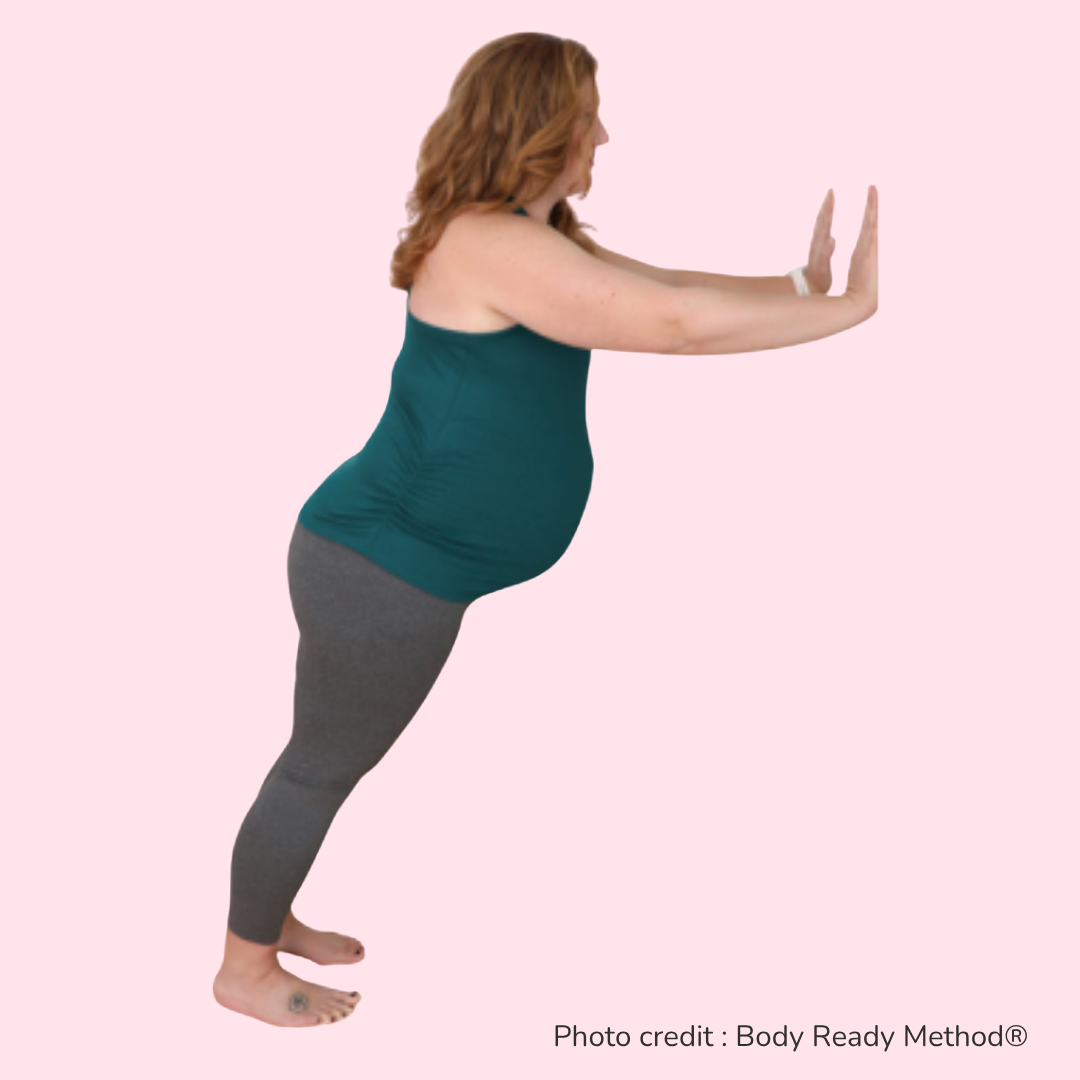
1. Standing Hip Extension
Stand facing a wall or a sturdy chair. Find a posterior pelvic tilt by gently tucking your pubic bone toward your nose to flatten your lower back. Push your hips forward in front of your ankles while maintaining that tuck.
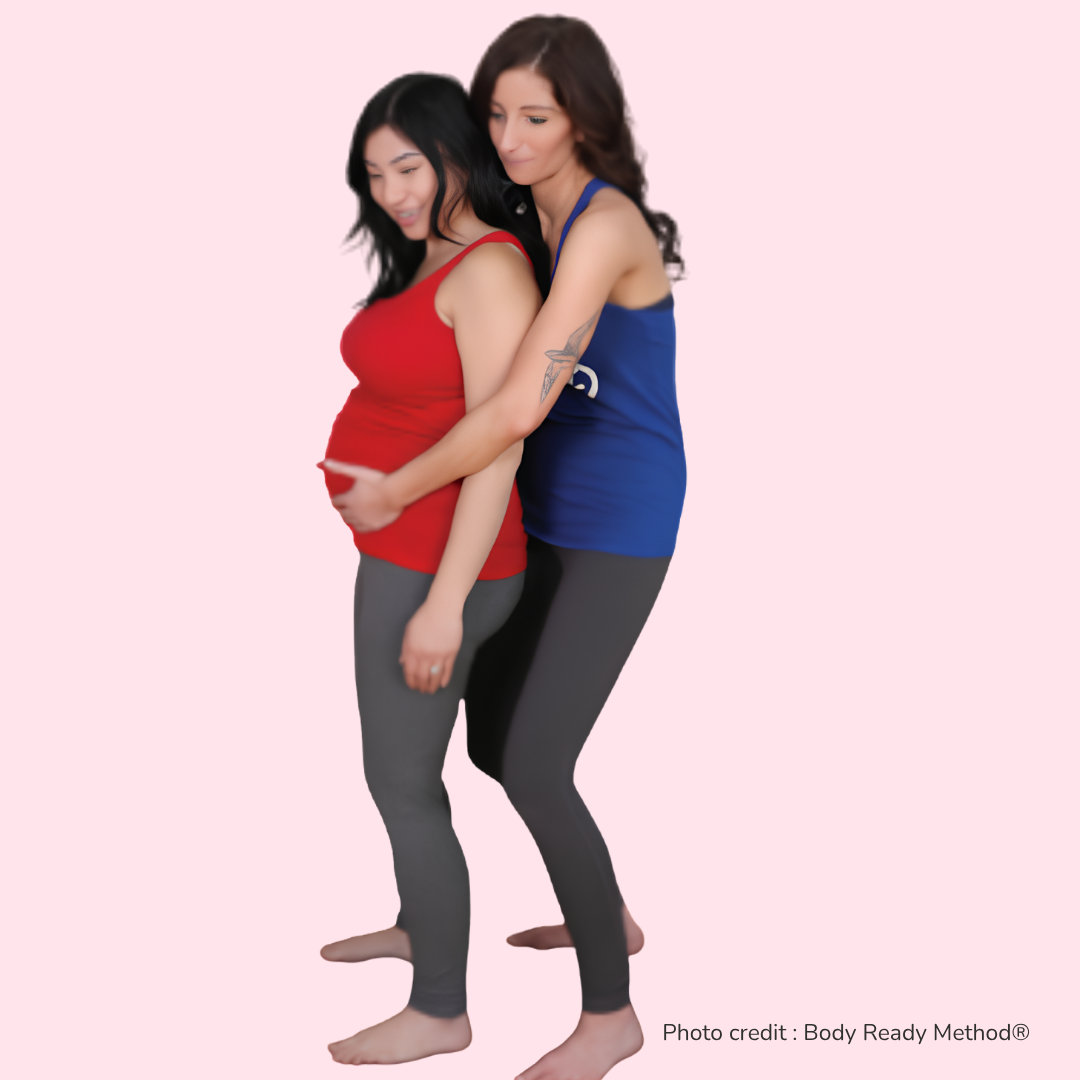
2. The Abdominal Lift and Tuck
During a contraction, have your partner cup their hands under your belly and gently lift upward while you perform a posterior pelvic tuck. This helps the baby navigate past the pelvic entrance.
Level 2: Navigating the Midpelvis (The Rotation Station)
At the midpelvis (stations -1 to +1), contractions often feel deeper and more internal, toward the cervix or deep in the lower back. You may find yourself intuitively seeking side-to-side, asymmetrical, or "shimmying" hip movements as your body tries to create space for rotation.
The goal is to create asymmetry between the ischial spines (the "narrowest" bony parts of the pelvis) to facilitate the baby’s rotation.
At this level, the baby must perform a "shimmy" to get past the bony protrusions on the sides of the pelvis. Since this is the narrowest point, our aim is to move the bones independently. By using asymmetrical movements, you move one ischial spine forward and the other back. This creates a "Rock Through" effect, providing the baby with more room to rotate their head and shoulders into the optimal position.
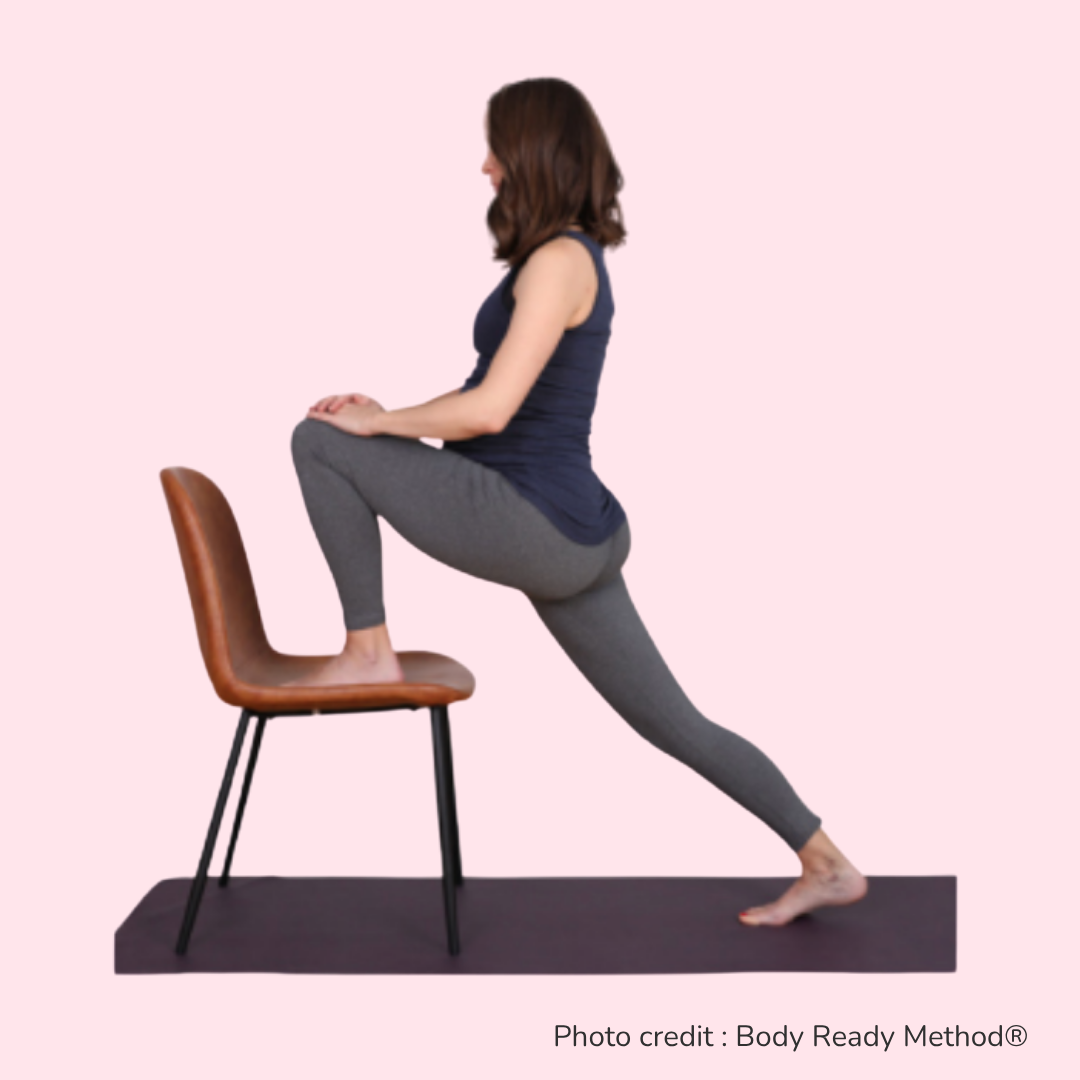
1. The Standing Lunge
Place one foot on a stool so that one hip is in deep flexion while the other is extended behind you. During contractions, lean into the flexed leg or sway.
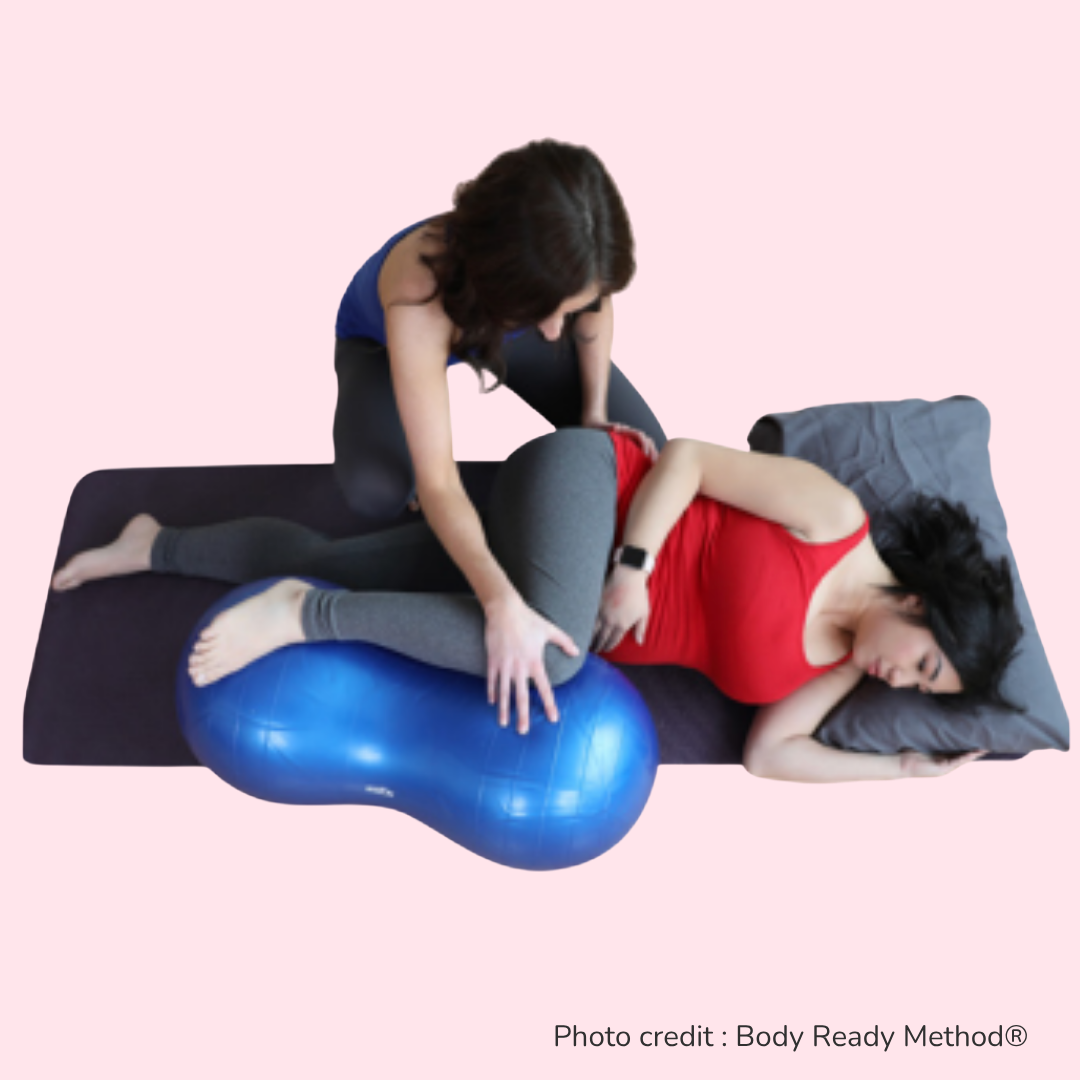
2. Exaggerated Side-Lying
Lie on your side with the bottom leg straight and slightly behind you. Bring the top leg forward into deep flexion, resting the knee on a peanut ball. This helps the baby rotate even if you are resting.
Level 3: Clearing the Pelvic Outlet (The Exit)
At the outlet (stations +2 to +4), the sensation moves very low. You will likely feel intense pressure deep in the rectum, the lower back, and the tailbone. There is often an undeniable, intuitive urge to push and a natural desire to "untuck" the pelvis to move the tailbone out of the way.
During this level, aim to widen the bottom of the pelvis side-to-side and move the tailbone (sacrum) back and out of the way.
The baby is now at the final “doorway”. The goal here is "sacral nutation"—the backward movement of the tailbone. By rotating the thighs inward (knees in, feet out) and "untucking" the pelvis, you create more exit space. Reaching up also stretches the back muscles connected to the sacrum, helping the tailbone lift so the baby can be born more efficiently.
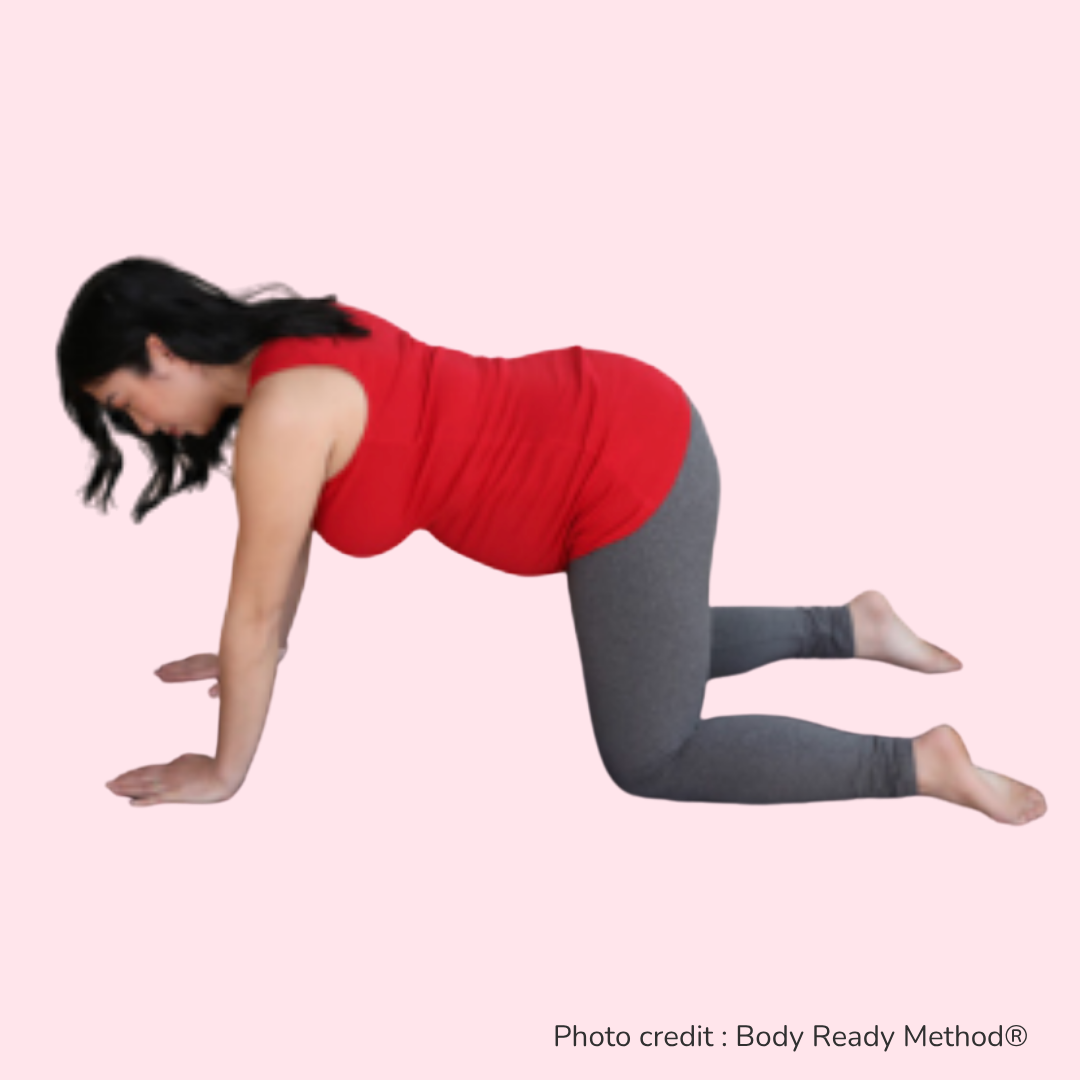
1. Internal Hip Rotation
On hands and knees, bring your knees close together and turn your ankles out wide. This "knees in, feet out" stance opens the pelvic outlet wider than a traditional squat.
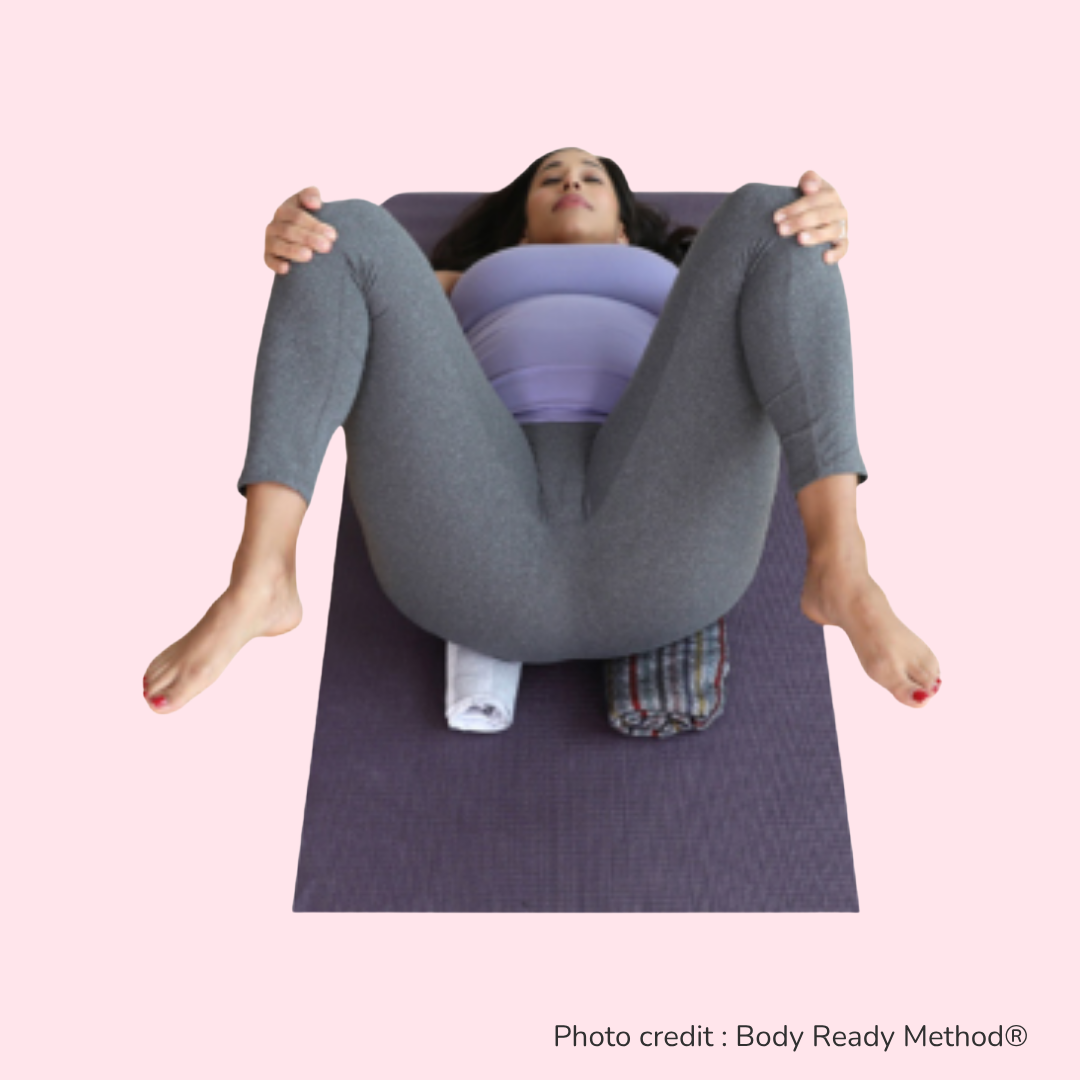
2. Sacral Roll
Place a rolled up towel under each sacroiliac joint, raising the lower back off the bed which gives space for the sacrum to nutate.
Specialized Preparation in New York City
At the Prenatal Massage & Movement Center, we offer distinct pathways to help you prepare for your birth journey, tailored to your schedule and location preferences.
The Body Ready Method® (BRM®): Your Training Program
Think of BRM® as your "pre-season" training. It is a proactive, functional movement program designed to be practiced throughout your pregnancy.
Focus: Long-term resilience, strength, and balance.
Format: Starts with a 1-hour movement assessment followed by customized 1-on-1 sessions.
Goal: To minimize pregnancy aches, prevent diastasis recti, and ensure your pelvic floor is working "smarter, not harder" well before labor begins.
Location: Currently offered exclusively as in-home sessions to ensure you can practice in your own space.
The Body Ready Birth In-Home Workshop: Your Labor Strategy
The Body Ready Birth Workshop is your "game day" strategy session. This is a transformative, 2-hour evidence-based workshop conducted in the comfort of your own home, specifically designed to prepare both your body and mind for the actual process of labor.
Focus: Immediate labor techniques and partner support.
The "ICE" Methodology: We focus on Innerwork (mindset), Communication (with your birth team), and Education (understanding the physiological vs. medical models of birth).
Goal: To practice the most effective birth positions before labor so they become innate. Your partner learns exactly how to use hands-on techniques to support your comfort and progress at all three levels of the pelvis.
Location: In-home only.
Labor Enhancement Massage & Movement
For those approaching or past their due date, this 90-minute session is the perfect combination of relaxation and preparation. Our founder, Anne Heckheimer, guides you through Spinning Babies® and BRM® based movements followed by targeted bodywork (such as light fascia stretching, and gentle massage techniques) to downregulate the nervous system and encourage labor progress.
Location: Available exclusively in-office.
Frequently Asked Questions About Pelvic Mobility & Birth
-
Opening your pelvis for a smoother labor involves moving through specific positions that target the three distinct levels of the pelvic journey: the inlet, midpelvis, and outlet. By practicing a series of movements, you can manually increase the diameter of the birth canal. Our Body Ready Method® training and Body Ready Birth workshops teach you how to intuitively find these positions, allowing your baby to rotate and descend with less resistance.
-
Yes, increasing pelvic mobility can significantly reduce the risk of common birth injuries, such as severe tearing or pelvic floor dysfunction. When the pelvis is mobile and the surrounding soft tissues—including the glutes and pelvic floor—are capable of yielding, the baby can pass through with less force and friction. Techniques that downregulate the nervous system and release unyielding tension, ensures that the pelvic floor can stretch to its necessary length during the crowning phase.
-
Unlike standard prenatal fitness that often focuses solely on general strength or "doing your Kegels," the Body Ready Method® is a functional training system specifically designed for the biomechanics of birth. We focus on five core pillars—pelvis, pelvic floor, core, upper body, and movement patterns—to ensure your body is balanced and resilient. Rather than just "staying fit," BRM® prepares you for the physiological demands of labor by identifying "blind spots" in your movement that could lead to labor stalls or common pregnancy pains like diastasis recti.
-
While many individuals find themselves drawn to birth preparation in their third trimester, the insights offered in our Body Ready Birth In-Home Workshop are invaluable at any stage of pregnancy. Taking the workshop earlier allows you more time to build the "brain-body connection" and practice the movements so they become innate by the time labor begins. Whether you are a first-time parent or seeking a more proactive experience for a VBAC (Vaginal Birth After Cesarean), this workshop provides the hands-on techniques and "ICE" (Innerwork, Communication, Education) methodology needed for an empowered delivery.
-
It is a 90-minute session combining Spinning Babies® and BRM® movements with bodywork like light fascia stretching, and gentle massage techniques. It is specifically designed for those near or past their due date to encourage labor progress and deep relaxation.
-
Our BRM® and Body Ready Birth Workshop are currently in-home only. Labor Enhancement sessions are performed in our offices and can be requested in-home. If you don't see online availability for Labor Enhancement Massage & Movement sessions, please call directly at 917-359-8176.
Book Your NYC Birth Preparation
Let us help you find the strength and mobility you need for an empowered birth experience that you deserve.
Upper East Side: 1751 2nd Ave, Suite AZ-5, New York, NY 10128
Upper West Side: 23 W 73rd St, Suite 100, New York, NY 10023
Financial District: 156 William St #800, New York, NY 10038
If you do not see an appointment availability suitable for you, please email us at info@prenatalmassagecenter.com
*Safety Note: Your well-being is our priority. We may be unable to schedule this session if you have signs of high-risk complications such as pre-eclampsia, bleeding, or high blood pressure.