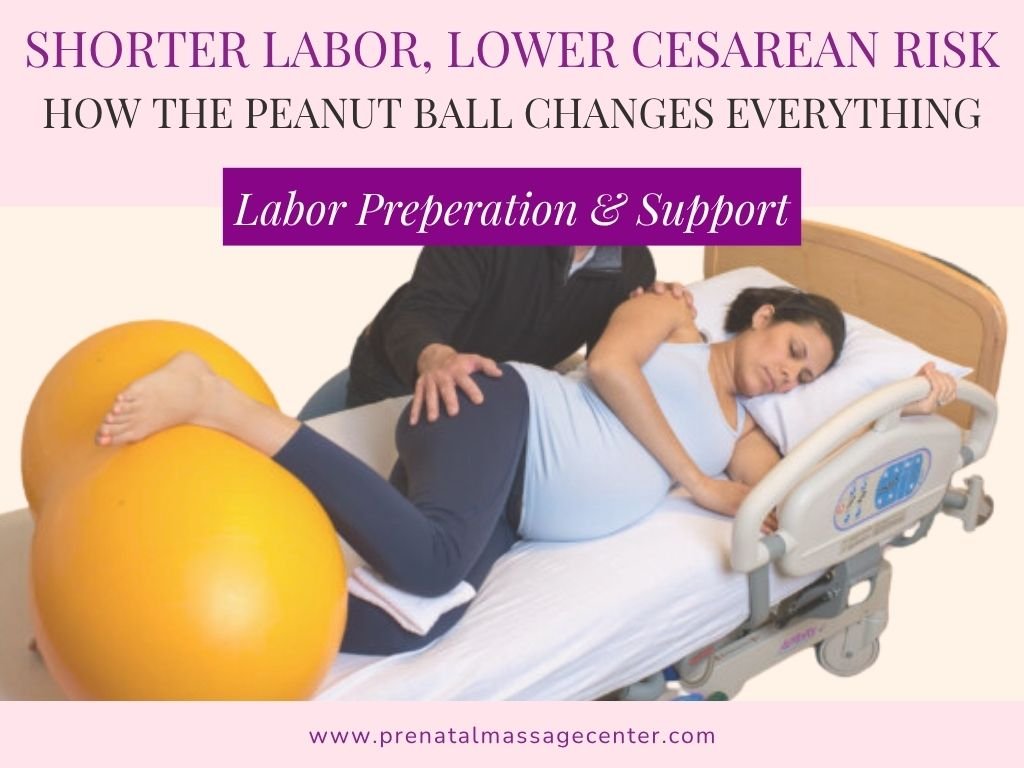
Shorter Labor, Lower Cesarean Risk: How the Peanut Ball Changes Everything
Share this blog post!
When navigating the physiologically demanding journey of childbirth, the goal is always to facilitate a smoother, more efficient progression. While traditional birth balls (the large, round exercise balls) are wonderful for remaining upright and mobile in early labor, what happens when you receive an epidural or need to rest in bed?
Enter the peanut ball. Shaped exactly like its namesake, this elongated, oblong birth prop is specifically designed to rest between your thighs. It shifts your pelvic bones into optimal alignment even when lying down, acting as a powerful tool to facilitate a more positive birth experience.
At the Prenatal Massage & Movement Center, we actively incorporate evidence-based movement strategies into our prenatal care. Research continuously confirms that using a peanut ball during labor can fundamentally change the trajectory of childbirth.
Clinical Evidence About the Peanut Ball During Labor
For years, labor and delivery nurses have witnessed the magic of this tool firsthand. A comprehensive analysis published in the European Journal of Midwifery examined data from multiple clinical trials involving over 1,350 laboring individuals. The clinical outcomes were striking:
A Significantly Shorter First Stage of Labor: For laboring individuals with an epidural, utilizing a peanut ball during labor shortened the first stage by an average of 52.98 minutes.
Reduced Cesarean Section Rates: The risk of requiring a surgical birth was significantly lower in the peanut ball group, representing a 26% reduction in Cesarean delivery rates compared to those who did not use one.
Increased Maternal Satisfaction: Across the analyzed studies, individuals who utilized peanut ball birth positions reported significantly higher satisfaction levels with their birth experience.
Why It Works & The Biomechanics of Pelvic Space
A labor stall often occurs not because the uterus isn't doing its job, but because the baby is navigating a narrow anatomical bottleneck. When you rest on your back or side in a standard hospital bed, your thighs naturally press together. This position closes the pelvic outlet, forcing the uterus to work much harder to push the baby through a restricted space.
Placing a peanut ball for labor between your ankles and knees automatically forces the femurs into a position that expands the pelvic diameter. By physically widening the path, you allow the baby to descend and rotate through the pelvic bones with far less resistance.
Mastering the "Flying Cowgirl" Position for Fetal Engagement
The peanut ball is incredibly versatile, but its effectiveness multiplies when paired with advanced biomechanical frameworks like Spinning Babies®.
When a baby remains high at the beginning of labor (-4 to -2 station) and is struggling to engage or drop below the pelvic brim, the goal is to open the pelvic inlet (the entrance of the pelvis). To achieve this while resting in bed, birth professionals rely on a specialized Spinning Babies® position known as the "Flying Cowgirl."
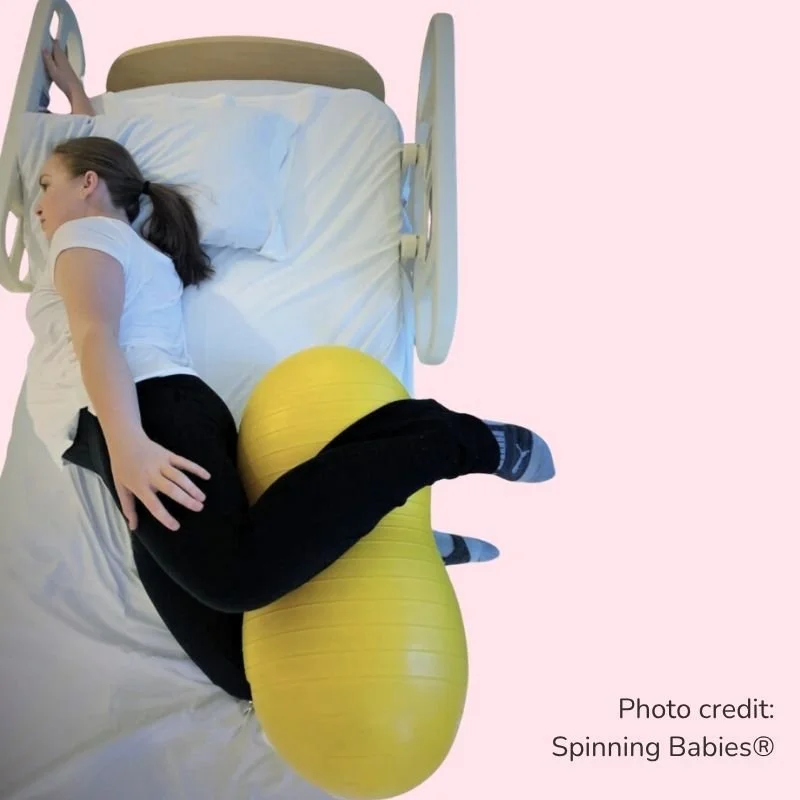
How to Position the Body:
The Side-Lying Setup: Begin by lying completely on your side.
The Pelvic Tuck: Intuitively tuck your pelvis forward into a posterior tilt (think "pubic bone toward your nose" to flatten the arch in your lower back).
The Leg Extension: Bring your knees and thighs well behind your hips, extending your legs backward into a half-wheel shape.
Insert the Peanut Ball: Place the peanut ball securely between your knees and upper thighs to create external hip rotation.
Why the Flying Cowgirl Works:
While lying on your side with your legs extended behind you, the anterior soft tissues of the pelvis are under a gentle stretch. This tension pulls the lower bones of the pelvis back and expands the front-to-back distance of your pelvic entrance. Concurrently, the peanut ball keeps the knees wide, which expands the side-to-side space of the inlet. This exact anatomical combination gives a high baby the precise room they need to rotate, tuck their chin, and successfully drop into the pelvis.
Strategic Alternatives to the Flying Cowgirl
Because the Flying Cowgirl requires you to remain side-lying, it may not suit your preferences or physical needs at the moment. If you need to open the pelvic inlet but want to explore other body options, consider the “Abdominal Lift and Tuck” technique.
Abdominal Lift and Tuck:
This highly effective Spinning Babies® technique should only be performed when contractions are strong, consistent, and regular.
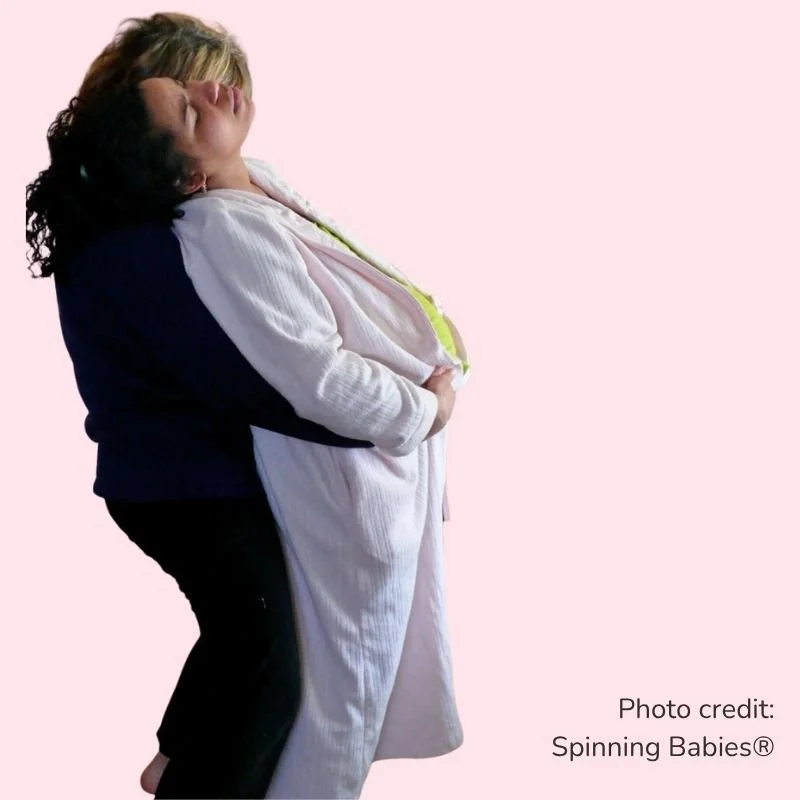
How to Perform the Abdominal Lift and Tuck:
Stand safely and interlace your fingers over your lower pubic bone, lifting your abdomen up and in by about two inches to lift the baby out of the pelvis. Simultaneously, flatten your lower back by tucking your pelvis into a deep posterior tilt. Hold this lifted, tucked position throughout the entire duration of the contraction, releasing slowly once it ends, and repeat this sequence for ten consecutive contractions. This releases abdominal tight spots and utilizes a posterior tilt to guide the baby past the entrance without stressing the spine.
Specialized In-Office Support in New York City
While utilizing a peanut ball during labor is an excellent strategy, facilitating optimal pelvic balance begins well before your first contraction. At our Manhattan offices, we offer targeted, specialized clinical support to help you prepare your body for childbirth.
Spinning Babies® Body Balancing
Starting at or around 24 weeks of pregnancy, our Spinning Babies® sessions focus exclusively on maternal physiology and fetal positioning to build comfort and ease. This approach uses hands-on soft tissue techniques to soften tight pelvic ligaments and loosen restricted fascia. By reducing hidden muscle tension and torsions in the womb, we create the balanced space your baby needs to move themselves into an optimal position for birth. This session is beneficial for all moms-to-be and is exceptionally helpful for those carrying breech, transverse, or posterior presenting babies.
Labor Enhancement Massage & Movement
If your due date is rapidly approaching or has already passed, we can support you with our signature 90-minute Labor Enhancement Massage & Movement session. Guided by our founder, Anne Heckheimer, this highly specialized treatment blends evidence-based movements—incorporating both Spinning Babies® and functional protocols—with advanced bodywork.
During the session, we utilize acupressure points, light fascia stretching, and gentle prenatal massage techniques to actively release deep tissue resistance, soothe the nervous system, and help move you closer to labor safely. You will also receive an instructional handout detailing labor pressure points for your partner or doula to use.
Note: this session is conducted in our offices and is not available if you have high-risk complications like pre-eclampsia or high blood pressure.
Frequently Asked Questions
-
The peanut ball is most effectively introduced during active labor, particularly once you have received an epidural or when you need to remain resting in bed. It is highly beneficial to alternate sides every 20 to 60 minutes to continuously shift the pelvic bones and encourage the baby to move through the pelvic maze.
-
A round birth ball is excellent for upright, mobile positioning in early labor—such as sitting, swaying, or leaning over it on hands and knees. However, once you are resting on your side, a round ball is unstable. The peanut ball is uniquely contoured to cradle your leg safely while lying down, making it the most suitable choice for bed rest.
-
A labor enhancement massage combines therapeutic bodywork with active positioning. During our 90-minute sessions, we utilize Body Ready Method®, Spinning Babies® and massage techniques to prepare the body for labor. This addresses the soft tissue imbalances that might otherwise prevent your baby from properly engaging in the pelvic inlet.
Schedule Your Birth Preparation Session
Founded in 2001, we are the only facility in New York City dedicated solely to the unique needs of prenatal and postpartum individuals. Let us help you cultivate the comfort, confidence, and physical space you deserve for birth.
Our Upper East Side office:
Book a session at our Upper East Side office
Our Upper West Side office:
Book a session at our Upper West Side office
Our Financial District office:
Book a session at our Financial District office
If you do not see online availability for our Labor Enhancement Massage & Movement or Spinning Babies® sessions on our scheduling platform, please reach out directly at 917-359-8176, orinfo@prenatalmassagecenter.com to coordinate your appointment.